
Spotting Fake Jade: A Buyer’s Guide for Shoppers
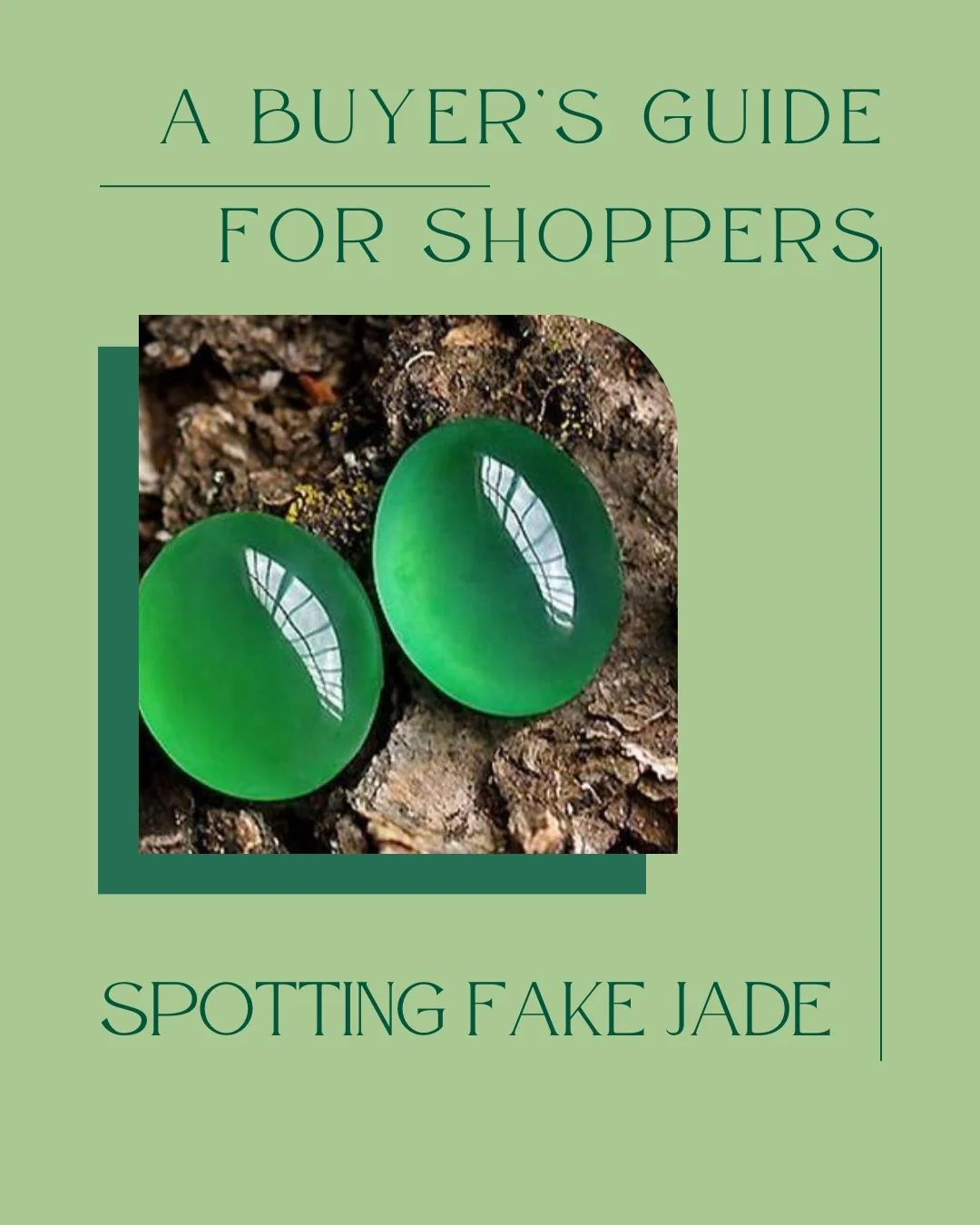
How to Spot Fake Jade: A Global Buyer’s Guide
Jade is loved worldwide for its beauty and cultural meaning, but fake jade is common. Here’s how to avoid scams and buy the real deal!
1. Check the Color
Real jade: Colors are rich but natural (green, white, lavender). Shades may vary slightly.
Fake jade: Colors look too bright, “plastic-like,” or uneven. Dyed jade often has blotchy spots. Image idea: Side-by-side comparison of natural vs. dyed jade.
2. Test Translucency
Real jade: Light passes through slightly (like a glow), especially in high-quality pieces.
Fake jade: Opaque or overly cloudy. Resin/plastic fakes may look too “glassy.” Image idea: Shine a flashlight through jade to show its glow.
3. Feel the Temperature
Real jade: Feels cool to touch and stays cool longer.
Fake jade: Plastic/glass imitations feel warm or room temperature. Image idea: Hand holding real jade vs. plastic.
4. Inspect the Texture
Real jade: Smooth but heavy and dense. Tiny natural flaws (like veins) are normal.
Fake jade: Lightweight, waxy, or has bubbles/perfect surfaces. Image idea: Close-up of jade’s natural texture vs. plastic’s smoothness.
5. Listen to the Sound
Real jade: Makes a crisp, melodic “clink” when tapped (e.g., beads or bangles).
Fake jade: Sounds dull or hollow. Image idea: Two jade beads tapped together.
6. Verify Certifications
Real jade: Comes with a lab report (e.g., GIA, AIGS) confirming it’s natural, untreated jade.
Fake jade: No certificates or vague “jade-like” labels. Image idea: Sample certification card.
7. Be Wary of Price
Real jade: High-quality jade (especially jadeite) is expensive.
Fake jade: Suspiciously cheap (e.g., $20 “jade” bracelets).
Buy Smart!
- Ask sellers: “Is this natural, untreated jade?”
- Trust your gut: If it feels “off,” walk away!
Final Tip
Real jade lasts generations. Fake jade fades or breaks easily. Invest in authenticity!
没有贴子
写评论


© 2026 Art Jade Era. 由 ART Jade Era 提供技术支持